Facial aesthetics are often treated as though the face exists independently from the rest of the body. Procedures, products, and techniques tend to focus exclusively on the skin and muscles of the face as visible markers of age. But the face is not isolated — it is supported, shaped, and constantly transformed by processes happening throughout the entire body.
This is precisely why true rejuvenation never begins with the face alone.
The quality of facial tissues, the expression of individual features, and the overall impression of youthfulness are closely linked to posture, neck mechanics, breathing, movement patterns, and the condition of the body as a whole.
The Face Reflects More Than Age
A face can look tired, heavy, or tense not only because of age but because of how the body functions. Chronic tension in the neck, jaw, shoulders, and chest alters how the face is supported and how it expresses itself. Poor posture and restricted diaphragm mobility affect tissue tone. What many perceive as “aging” is often, at least in part, a visible manifestation of accumulated tension and compensation patterns.
The Role of the Neck and Posture in Facial Support
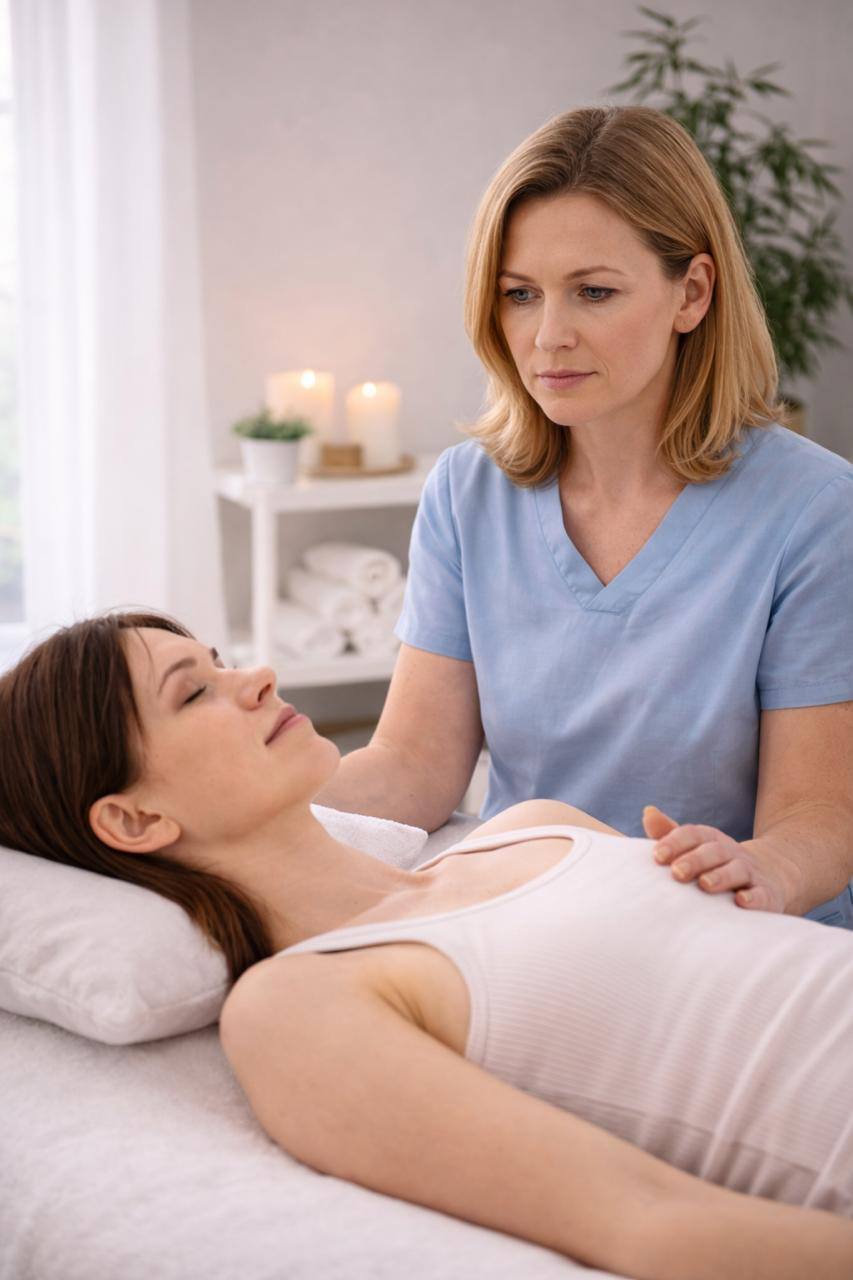 The face rests on the neck, and the neck is part of the entire spinal system. When the head habitually juts forward, the shoulders round, and the upper chest closes off — the structures supporting the face simply cannot function at their best.
This can contribute to:
- Heaviness in the lower third of the face
- Jaw tension
- Reduced softness around the mouth
- Tension across the forehead
- A strained facial expression overall
- A diminished sense of lightness
Balanced posture improves more than just the body’s silhouette — it visibly changes the face.
Fascial Continuity and Holistic Aesthetics
The body is connected through fascial and muscular networks. Tension rarely stays confined to a single area. Restrictions in the chest, shoulders, jaw, diaphragm, and even the pelvis can influence the face through broader patterns of strain and compensation.
This is exactly why working on the face in isolation often produces limited depth. If the surrounding structures remain locked in tension, the face continues to live in the same environment that created the problem in the first place.
A holistic approach takes into account:
- Restoration of the cervical spine
- Release of the shoulders and chest
- Breathing mechanics
- Relaxation of the jaw area
- Spinal support and alignment
- The state of the nervous system
These factors don’t replace facial work — they make it deeper and longer lasting.
Rejuvenation and the Nervous System
A beautiful face is not only a matter of structure. It is also a reflection of the nervous system’s state. A person living in chronic stress often carries that condition on their face — the expression becomes guarded, the jaw clenches, and the tissues look rigid and dull.
When the nervous system becomes more regulated:
- The face softens
- The expression becomes calmer
- Circulation improves
- Tension patterns diminish
- A natural vitality shines through more clearly
Gentle integrative work supports the face not through invasion, but by improving the conditions that shape it every single day.
This may include:
- Releasing neck and jaw tension
- Improving posture
- Restoring chest mobility
- Supporting diaphragmatic breathing
- Developing body awareness
- Reducing chronic compensation patterns
As the body becomes more organized, the face often reflects this with greater softness, lightness, and natural vitality.
Beauty as an Expression of Inner Balance
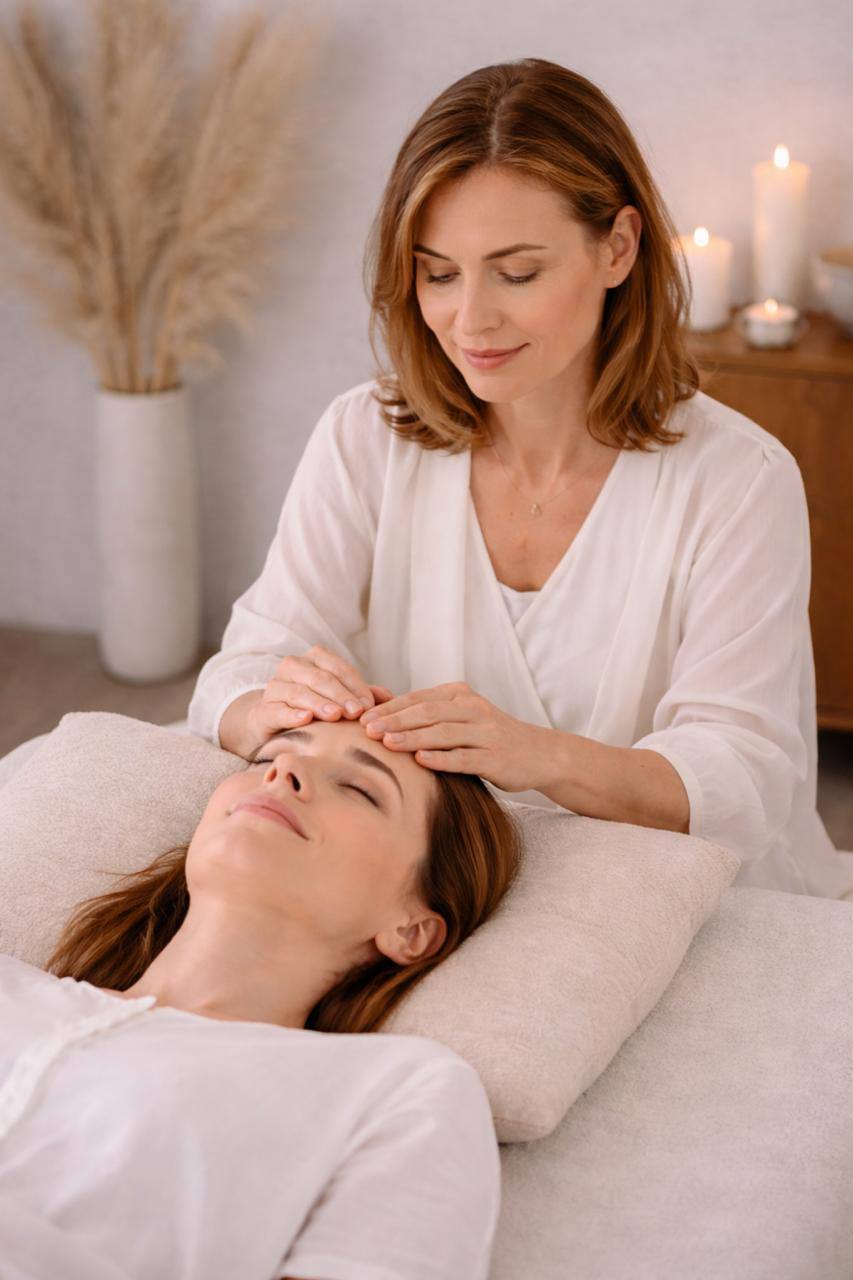 The most lasting aesthetic changes tend to happen when the body stops spending so much energy on tension and compensation. When the muscles of the back and thoracic spine are well-toned and symmetrical, breathing flows freely, and the neck returns to its natural position — the changes immediately show on the face:
- Facial contour lifts
- Puffiness subsides
- Jawline becomes defined
- Skin tone and color improve
This creates a quality of beauty that feels alive — not artificial.
From this perspective, beauty is not just about facial symmetry or smooth skin. It is also about wholeness — the visible reflection of inner balance.
Conclusion
Rejuvenation doesn’t start with the face alone, because the face is part of a much larger system. Its tone, expression, and vitality depend on posture, breathing, tension, spinal support, and the state of the nervous system. When aesthetic work includes the body, the result often becomes deeper, softer, and more natural.