

Today, aesthetic rejuvenation is often reduced to injections, fillers, and other quick correction methods. But this approach has a limitation: it primarily addresses the outward signs of aging rather than the reasons why the face loses its freshness, tone, and harmony. The biodynamic approach offers a different logic: instead of filling, blocking, or pulling tissues, it restores the conditions under which the face naturally begins to look more alive, softer, and more balanced. This is not masking age — it is working with tissue quality, microcirculation, musculofascial balance, and the overall state of the nervous system.
The Essence of the Biodynamic Approach
The face cannot be viewed separately from the neck, posture, breathing, fascial condition, blood circulation, lymphatic drainage, and the level of internal tension. When stress accumulates in the body, tissue mobility declines, muscle hypertonicity increases, breathing quality decreases, and drainage is disrupted — all of which quickly shows on the face: puffiness, swelling, heaviness, asymmetry, dull skin tone, deepened folds, and a tired expression.
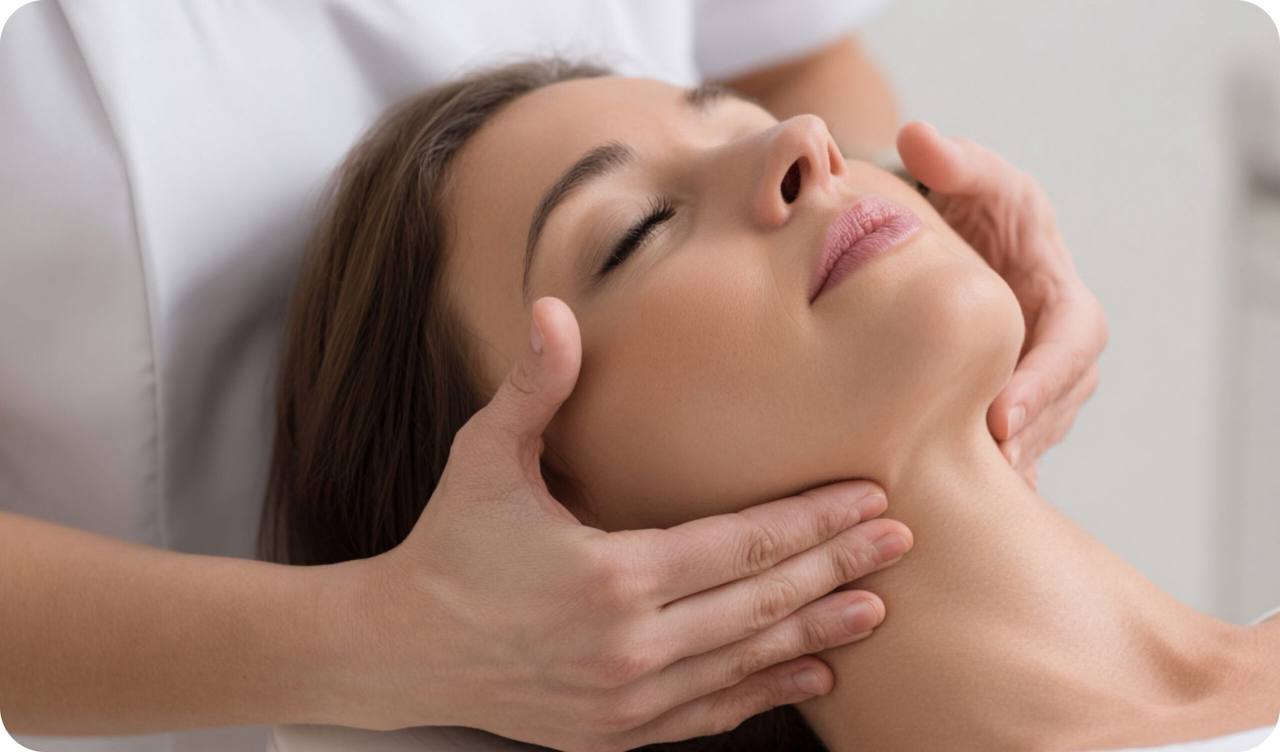
Biodynamic work targets precisely these mechanisms. It helps reduce excessive tension, improve tissue mobility, and return the face to a more natural state — without forceful intervention.
How This Approach Differs from Injections
Invasive cosmetology is most often built on external correction: adding volume, temporarily blocking a muscle, altering contour, smoothing a fold. The biodynamic approach works differently — it does not introduce additional substances into the tissues, does not shut down facial expression, and does not change the face artificially. Its goal is to restore physiological tone, tissue softness, and natural mobility.
This is a fundamentally different philosophy.
Injections deliver a quick visual effect. The biodynamic approach delivers a more gradual but natural result by restoring the quality of the tissues themselves.
Why More People Are Choosing the Natural Path
Today, for many people it is no longer enough to simply “look younger.” What matters more is preserving one’s own face — alive, expressive, individual. People want to see not the effect of intervention but the effect of restoration: a clearer gaze, calmer features, reduced puffiness, a softer contour, better skin texture, and a sense of inner vitality.
This is exactly why the natural approach is becoming increasingly valued. It does not try to “fix age” — it helps reduce what actually weighs the face down: stagnation, spasm, tissue overload, and chronic tension.
Risks and Limitations of Invasive Cosmetology
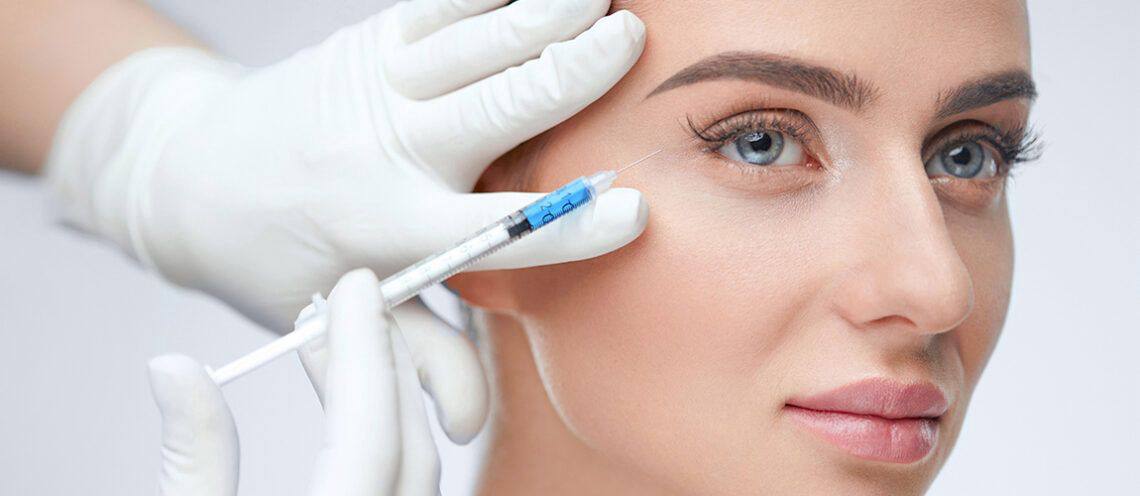
It is important to speak about this directly: invasive techniques are not a harmless “skincare procedure” — they are a medical intervention with known risks. Even when performed correctly, fillers can cause swelling, bruising, pain, inflammatory reactions, nodules, product migration, infections, and delayed complications. More serious, though rare, risks when the product accidentally enters a blood vessel include tissue ischemia, skin necrosis, vision impairment, blindness, and stroke. Such complications are described in official safety warnings for dermal fillers.
Botulinum therapy is also not a neutral procedure. Possible side effects include drooping of the eyelid or brow, double vision, muscle weakness, swallowing difficulties, localized pain, swelling, and other adverse reactions. Even if some of these effects are temporary, the very logic of the method is based on artificially weakening muscle activity rather than restoring physiological tissue balance.
Beyond direct complications, there is another important point: when relying solely on injections over time, a person often avoids addressing the real causes of age-related changes. Issues of posture, breathing, neck tension, lymphatic stagnation, habitual mimetic overload, and overall stress remain unresolved. As a result, the face may look “corrected” but not necessarily more alive or harmonious.
What Biodynamic Facial Work Provides
The biodynamic approach does not promise an instant reversal of age. Its effect lies elsewhere. It can contribute to:
- Reduction of puffiness and tissue pastiness
- Improved microcirculation quality
- Freer lymphatic drainage
- Softening of excessive tension in mimetic and masticatory muscles
- Improved tissue mobility of the face, neck, and cranium
- A calmer and more open facial expression
- Preservation of natural facial expression and individuality
This kind of rejuvenation looks not “done” — but restored.
Who This Approach Resonates With
It is especially suited for those who do not want aggressive intervention, who want to preserve a natural face without an artificial look, who understand the connection between appearance, the nervous system, the body, and breathing, and who are seeking not short-term correction but deeper, more physiological work with age-related changes.
Conclusion
The biodynamic approach to facial rejuvenation is a path not of external correction but of internal restoration. It differs from invasive cosmetology in that it does not create artificial volume, does not block natural facial expression, and does not carry the risks associated with injection-based interventions. Its goal is to return mobility to the tissues, softness and vitality to the face, and to the person — a sense of their own natural beauty.
This is why this approach can be called not simply an alternative to injections, but a more mature rejuvenation strategy: gentle, physiological, and oriented not toward a quick effect but toward tissue quality and facial harmony as a whole.