

Reiki is often described as the limitless healing energy of the Universe.
Rei means Universe, spirit, or higher intelligence.
Ki means life energy.
The practice of Reiki was rediscovered and studied in 1922 by Mikao Usui and later passed on to his students.
Reiki is life energy guided by a higher intelligence. It is not an energy that can be summoned through willpower or controlled by the mind. It cannot be used to cause harm. A Reiki practitioner becomes a channel for this energy, not its source.
Reiki energy is believed to have its own inner intelligence. It naturally flows to the areas where it is most needed and works for the highest good.
When the flow of life energy becomes disrupted, stagnation or energetic blockages may appear, which can eventually manifest as imbalance in the body or mind. Many traditions suggest that such blocks are often connected with unresolved emotions, stress, or deeply held thoughts that may even exist at a subconscious level. Reiki is said to gently reach these layers and help release inner tension in a calm and non-forceful way.
One of the most valued aspects of Reiki is its ability to influence the deeper emotional and subconscious levels in a gentle manner. When the flow of Reiki reaches areas of tension, it may help the body relax and release accumulated stress, allowing natural self-restorative processes to resume.
What Happens During a Reiki Session
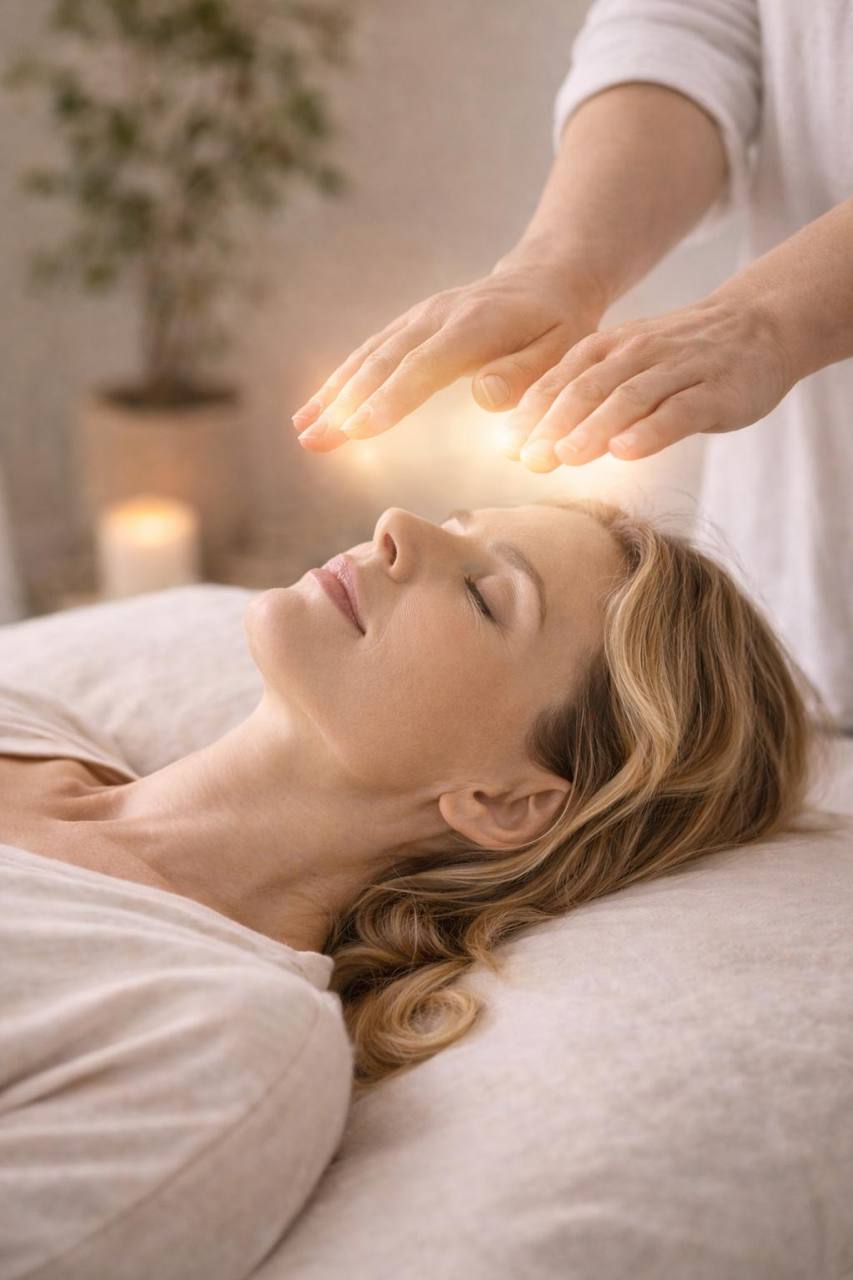 A Reiki session is a calm and meditative process focused on harmonizing a person’s energetic state.
Unlike active bodywork techniques, the practice is based on presence, attention, and subtle interaction. Touch may be very light or completely absent.
During a session, many people report sensations such as warmth, inner stillness, or deep relaxation. These experiences are often associated with the nervous system gradually shifting into a state of rest.
It is important to understand that in Reiki practice there is no transfer of personal energy from one person to another. The practitioner simply facilitates a space of harmony in which the body can restore balance on its own.
Reiki is rooted in principles of calmness, respect, and gratitude. Because of this, changes are believed to occur gently and naturally, without pressure.
After a session, people often report clearer thinking, emotional relief, and a greater sense of inner stability.
Reiki is more than a healing technique. For many, it becomes a way of living in harmony with oneself, with others, and with the universe. It encourages a deeper awareness of life, supports well-being, and helps people reconnect with their inner wisdom.
The flow of Reiki is often described as a flow of love, awareness, and life force — available to anyone who is open to receiving it with respect and trust.